Beyond sustainability
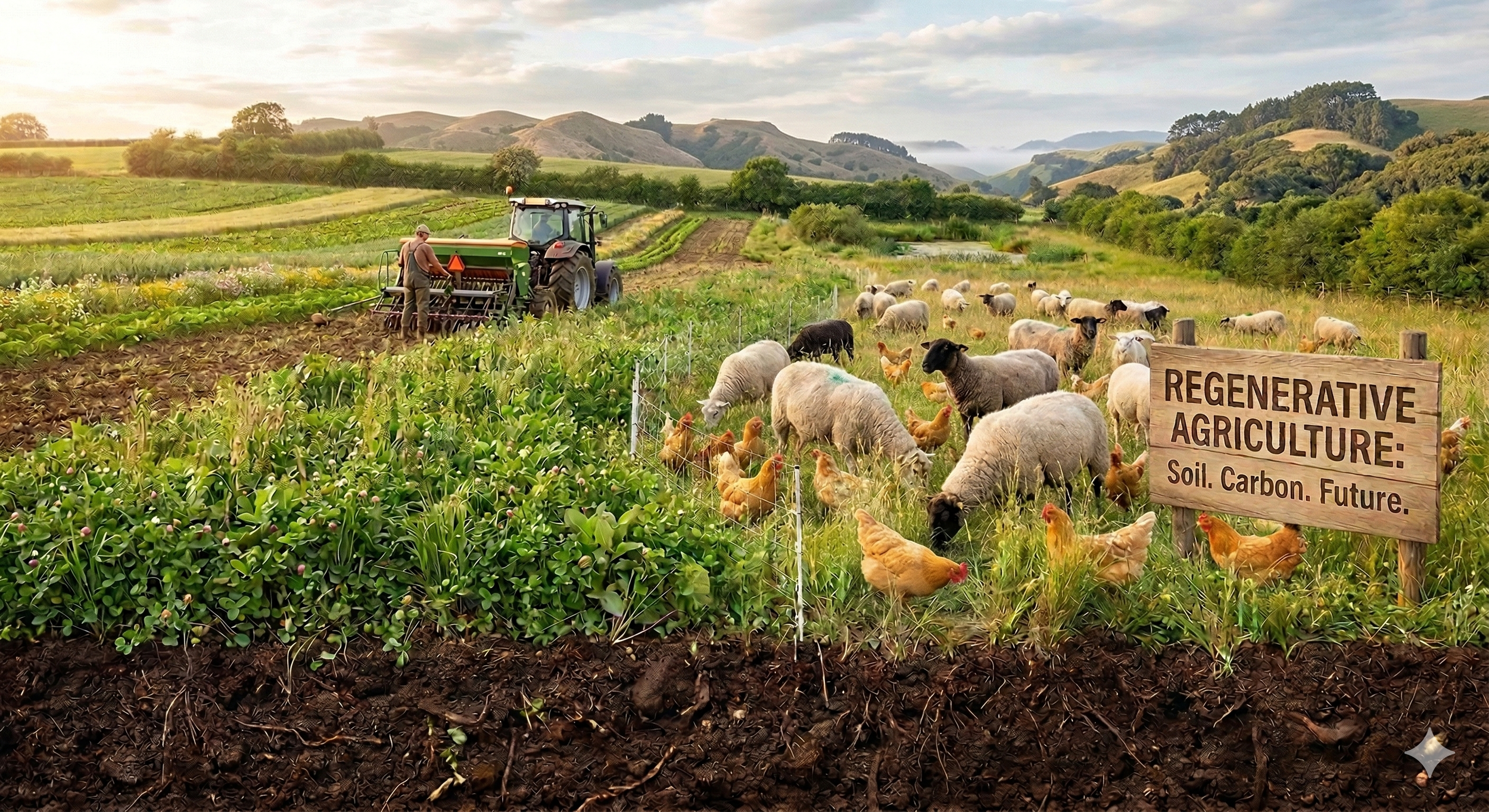
AI-generated image: The image is a vibrant, panoramic landscape that visually tells the story of Regenerative Agriculture by showing a "slice" of a healthy farm ecosystem.
Why the Future of Food is Regenerative
For decades, the "gold standard" of environmental farming was sustainability. The goal was simple: do no harm. Maintain the status quo. Leave the land as you found it.
But in 2026, we are realizing that "maintaining" isn't enough. With global topsoil eroding at an alarming rate and carbon levels in the atmosphere continuing to rise, we don’t just need to sustain our resources—we need to rebuild them.
This is the core of Regenerative Agriculture. It is a holistic approach to farming that doesn’t just minimize the "footprint" of a farm; it turns the farm into a "thumbprint" of restoration.
The Five Pillars of a Living Farm
According to the principles of the regenerative movement, a farm is only as healthy as its soil. To achieve this, practitioners focus on five key techniques:
Minimize Soil Disturbance: Traditional plowing (tilling) breaks up the complex fungal networks and biological structures in the dirt. Regenerative farmers use "no-till" methods, keeping the soil’s "neighborhood" intact.
Maximize Crop Diversity: Nature hates a monoculture. By rotating crops and planting diverse species together, farmers break pest cycles and naturally enrich the soil with a variety of nutrients.
Keep the Soil Covered: Bare soil is vulnerable soil. Using cover crops or mulch protects the land from erosion and extreme heat, acting like a "skin" for the earth.
Maintain Living Roots Year-Round: Roots feed the microbes underground. By keeping plants in the ground even during the off-season, farmers ensure the soil ecosystem never goes hungry.
Integrate Livestock: In nature, animals and plants exist in a loop. Managed grazing allows livestock to fertilize the land naturally, stimulating plant growth and sequestering more carbon in the process.
Why It Matters: The "Triple Win"
Regenerative agriculture isn't just a win for the planet; it’s a win for the farmer and the consumer, too.
For the Planet: Healthy, carbon-rich soil acts like a giant sponge. It holds more water, which prevents flooding during storms and keeps crops alive during droughts. Most importantly, it pulls CO2 out of the air and stores it underground.
For the Farmer: By relying on natural biology instead of expensive synthetic fertilizers and pesticides, farmers can lower their overhead costs and build a more resilient business that can survive a changing climate.
For You: There is a growing body of evidence suggesting that soil health is directly linked to nutrient density. When we restore the minerals and microbial life in the dirt, we produce food that is literally "better" for our bodies.
The 2026 Perspective: From Niche to Necessity
What was once a fringe movement led by pioneers like Gabe Brown and the Rodale Institute has now entered the mainstream. Major food brands are beginning to realize that their supply chains depend on the health of the earth.
We are moving away from the "Chemistry Era" of farming—where we tried to outsmart nature with lab-grown inputs—and entering the "Biology Era," where we use modern science to partner with nature's existing intelligence.
How You Can Help
You don’t need a tractor to support this movement. As a consumer, your "vote" happens at the grocery store.
Look for Certifications: Keep an eye out for the Regenerative Organic Certified (ROC) label.
Know Your Farmer: Shop at local farmers' markets and ask about their soil management practices.
Spread the Word: The more people understand that food can be a tool for climate repair, the faster the industry will shift.
The Bottom Line: Sustainability was the goal of the 20th century. Regeneration is the mission of the 21st. It’s time to stop just "saving" the earth and start growing it back.